Study in Canada
Your gateway to world-class education and a pathway to Canadian permanent residency.
Understanding the Canadian application procedure Student Visa
For students from all around the world, Canada is a renowned international study destination. You must first get a Canadian study visa if you wish to study in Canada. Let’s go over the application procedure and visa requirements in depth.
Applying for a Study Visa in Canada
The Study Visa enables a person to study at a DLI (Designated Learning Institution) in Canada. While filing a study permit application, a foreign person should be informed that there are qualifying conditions that must be completed. Furthermore, some requirements must be satisfied during the applicant's stay in Canada.
There are multiple processes required to qualify for a study permit, and processing periods vary widely between countries, so it is essential to prepare ahead of time to guarantee your permission is approved before the start of your study term. The bulk of post-secondary educational programs in Canada start in September, January, or May, with a few exceptions offering intakes outside of those dates.
Because a foreign citizen cannot apply for a study permit unless they have obtained an acceptance letter, they should check the start date and application process for their desired schools and programs well in advance to make sure they have enough time to receive the acceptance letter and complete the study permit application.
The Canada Student Visa Requirements
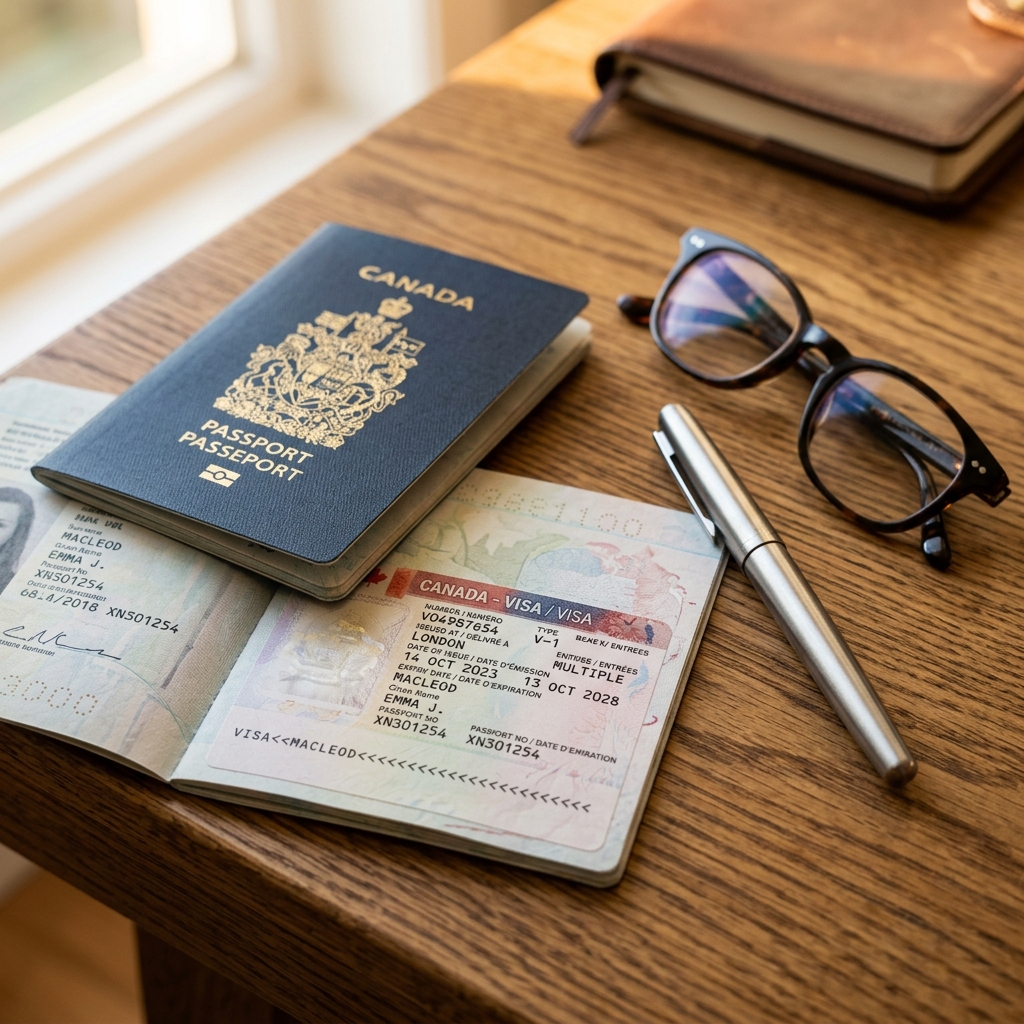
If you want to apply for a Canadian study visa, you must complete two sets of criteria: eligibility requirements and requirements while studying in Canada.
Criteria for Eligibility
You must satisfy the following conditions to be eligible to apply for a study permit and Canadian immigration:
Acceptance Letter
You must obtain an acceptance letter from a Recognized Learning Institution in order to apply for a Canadian study visa (DLI).
Evidence of Financial Support
You must produce proof indicating that you have the means to cover tuition for your first year of study, as well as living expenses (housing, food, etc.) for yourself and any accompanying family members during your first year of study. Please remember that this money might be in your name or the name of a family member or close friend.
Supporting Documentation
All applications for academic permits must contain significant supporting documentation. This paperwork varies from nation to country. To find out what papers are needed for a certain area, visit the Immigration, Refugees, and Citizenship Canada (IRCC) website, or just contact us.
When you apply for a visa, the visa officer will certify that you match the conditions. If the visa officer finds your application poor, it may be refused.
Qualifications for studying in Canada
If your study permit is accepted and you enter Canada as an international student, you must comply with the rules specified below in order for your study permission to remain valid. A foreign student with a study permit in Canada must:
- Be enrolled in a DLI (Designated Learning Institution) and should endeavour to complete their program.
- Pay careful thought and respect to the rules & limitations indicated on their study permission.
- Stop his/her study program if he/she no longer satisfies the standards and depart Canada when their permission expires.
Application Procedure for Immigration to Canada

A Canada student visa is obtained in four stages:
Check your eligibility
Check to verify whether you are qualified for a student visa in Canada. A DLI admission letter, proof of financial assistance, and a range of documentation will be required, depending on your citizenship and domicile country.
Complete your application
You can begin working on your study permit application if you fulfil all of the qualifying conditions. Verify that you have all of the required documentation for your country. Immigration authorities have the right to refuse study permits if they consider an applicant has not completed all requirements, therefore you should have your application reviewed by an experienced immigration representative before submitting it.
Submit your application
You have two options when submitting your application:
- Send in your digital application: Establish an account on the website of Immigration, Refugees, and Citizenship Canada (IRCC) and submit an application electronically along with scanned or electronic copies of documents. Or,
- Fill out a paper application: Prepare a physical copy of your application and mail it to your country’s Visa Application Centre (VAC).
Once your study permit is accepted, you may begin organizing your time in Canada.
It is crucial to note that you will not be awarded a Canada study permit until you arrive at a Canadian Point of Entry (POE). Once your permission is accepted, the Canadian government will send you a Port of Entry Introductory Letter. You must save this letter and show it to an immigration officer when you arrive in Canada to acquire your study visa.
Remember that your study permit does not act as a visa. This implies that you may need a travel visa to visit the POE in Canada, depending on your place of origin. The following classifications are defined:
Visa Exempt Countries
Citizens of the following countries do not require a visa to enter Canada. You can get your study permission at the port of entry. Take note that an Electronic Travel Authorization (ETA) may still be required to visit Canada.
Citizens of non-visa-exempt nations must get a visa to enter Canada. After your application for a study permit is granted, the visa officer will issue you a travel visa that will allow you to enter Canada.
If you have entered Canada lawfully, you may apply from within the country. Once your application is approved, your study permission will be mailed to you.
Ready to start your journey?
Fill out the form below and our immigration experts will get in touch with you shortly to discuss your eligibility.